
Bank of Canada Holds Again: Time to Rethink Your Pro Forma
Underwrite 2.75%, Not 2.25%
Seven consecutive holds, an economy growing at 3.3%, and a Governor warning that upside risks to inflation have increased — while stating plainly that monetary policy cannot fix an oil-driven inflation problem. That is the case for a stress case, not for waiting on a cut.
Urban Land Group · September 8, 2026
On September 2 the Bank of Canada held the overnight rate at 2.25%, with the Bank Rate at 2.5% and the deposit rate at 2.20%. It was the seventh consecutive hold since the cut of October 29, 2025. The rate line was a non-event. The reasoning is where the signal sits.
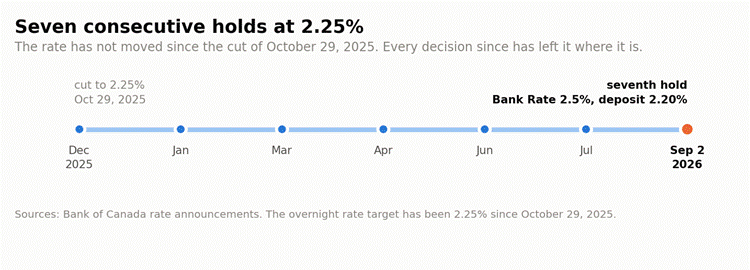
Figure 1 — The policy rate has not moved in seven decisions.
The hold is not a sign of weakness
Read the Governor’s opening statement and the picture is of an economy recovering, not stalling. Second-quarter GDP came in at 3.3% after a weak first quarter, and Macklem described the strength as “broad based,” with rebounds in housing, exports and business investment. Unemployment had edged down to 6.4% in July on increased private-sector hiring.
A recovering economy is what lets a central bank sit still. What stops it from cutting is on the price side: CPI inflation “has remained at around 3%,” above target, driven mainly by gasoline. Excluding gasoline, inflation was 2.2% in July — the one genuinely comfortable number in the print.
The two sentences that matter
The first is the risk balance, stated without hedging:
“Upside risks to our inflation forecast have increased.” — Governor Tiff Macklem, September 2, 2026
The second is the more important one, and it is the reason forward guidance is now genuinely two-directional rather than a longer wait for easing:
“Monetary policy cannot offset the effects of tariffs or influence global energy prices.” — Governor Tiff Macklem, September 2, 2026
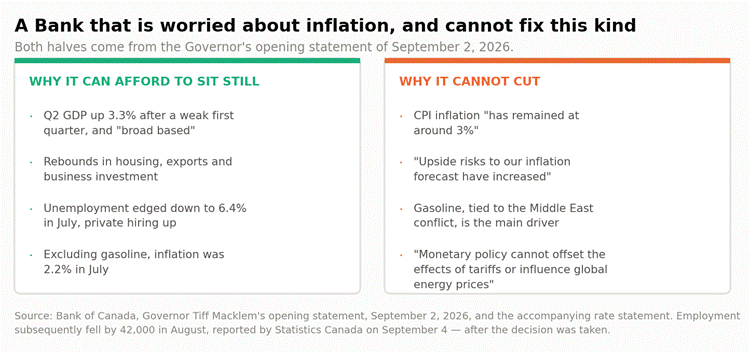
Figure 2 — The case for holding, and the limits of the tool.
The drivers of this inflation are supply-side. If oil stays elevated on the Middle East conflict, the Bank has no clean instrument to bring headline back to target except to stay restrictive. Framed against seven holds, “prepared to adjust monetary policy as needed” is not a euphemism for patience. It puts a hike back on the table.
What that means for a financing assumption
The practical translation is narrow, and it does not require picking a side. Model the take-out at 2.50–2.75%, not at 2.25%. You are underwriting the scenario in which a stubborn 3% headline forces the Bank’s hand — not the one in which financing quietly gets cheaper while you wait.
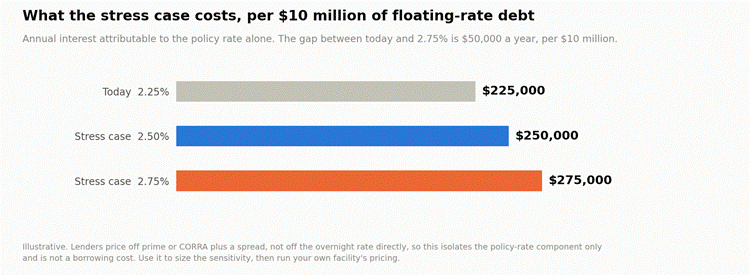
Figure 3 — The policy-rate component of the stress case, per $10 million.
The two dates that resolve it are on the calendar. September 14 brings August CPI — the first inflation reading since the hold. If headline stays near 3% or core drifts up, October 28 starts looking live, and that decision carries a full Monetary Policy Report. If gasoline unwinds and core softens, the two-directional stance tilts back toward patience.
| THE ULG VIEW The standing instruction is a 2.50–2.75% overnight take-out as the stress case, and it should stay that way through October. Do not underwrite a rate-cut tailwind into any take-out or refinance inside twelve months. The market spent much of this year pricing an easing cycle; after seven holds and an explicit warning about upside risks, the next move is at least as likely up as down. If a deal only pencils on falling rates, it is a rate bet with a land component. That was always true. What changed on September 2 is that the central bank said out loud it has no clean tool for this kind of inflation. You are not waiting for a rescue that is being prepared. The squeeze runs from both ends, and this is the part a bank note will not tell you. The same inflation keeping the Bank restrictive is eroding the other side of your pro forma. Average hourly wages grew 2.0% year over year in August against headline inflation near 3% — real incomes are falling. So financing cost holds up while buyer purchasing power goes down. Underwriting a flat rate and a rising rent or price escalator in the same model is internally inconsistent right now. Pick one. Watch October 28 for the projection, not the rate. That decision carries a full Monetary Policy Report. The Bank can hold the rate and still move its inflation path — and it is the path, not the level, that reprices a two-year construction facility. Before that, September 14 does more to your financing assumptions than anything else this month. |
| THE LABOUR PICTURE CHANGED AFTER THE DECISION The Bank’s case for holding rested partly on a firming labour market: unemployment edging down to 6.4% in July, with increased private-sector hiring. That was the most recent data available on September 2. On September 4, Statistics Canada reported that employment fell by 42,000 in August, that Ontario shed 18,000 jobs and now carries a 6.9% unemployment rate, and that average hourly wages grew just 2.0%. The national rate held at 6.4% only because participation fell. Any read of the September statement that leans on labour-market strength is now leaning on a number that did not repeat. Both the hawkish and the dovish cases picked up fresh evidence in the same week, which is precisely why the stress case is a range rather than a call. |
Sources
· Bank of Canada — rate announcement and statement, September 2, 2026. https://www.bankofcanada.ca/2026/09/fad-press-release-2026-09-02/
· Bank of Canada — Governor’s opening statement, September 2, 2026. https://www.bankofcanada.ca/2026/09/opening-statement-2026-09-02/
· Bank of Canada — “Bank of Canada lowers policy rate to 2¼%,” October 29, 2025. https://www.bankofcanada.ca/2025/10/fad-press-release-2025-10-29/
· Bank of Canada — upcoming events (October 28 interest rate announcement and Monetary Policy Report). https://www.bankofcanada.ca/press/upcoming-events/
· Statistics Canada — Labour Force Survey, August 2026 (released September 4, 2026). https://www150.statcan.gc.ca/n1/daily-quotidien/260904/dq260904a-eng.htm
· Statistics Canada — 2026–2027 release dates, major economic releases (August CPI, September 14). https://www150.statcan.gc.ca/n1/release-diffusion/2026-eng.pdf
Charts by Urban Land Group from the Bank of Canada and Statistics Canada sources listed above. Quotations are verbatim from the Governor’s opening statement. The stress-case figures isolate the policy-rate component of interest cost and are not a borrowing cost. General market commentary; not investment, financial or planning advice.