
Ottawa Would Exempt New Homes. Ontario Would Still Charge 25%.
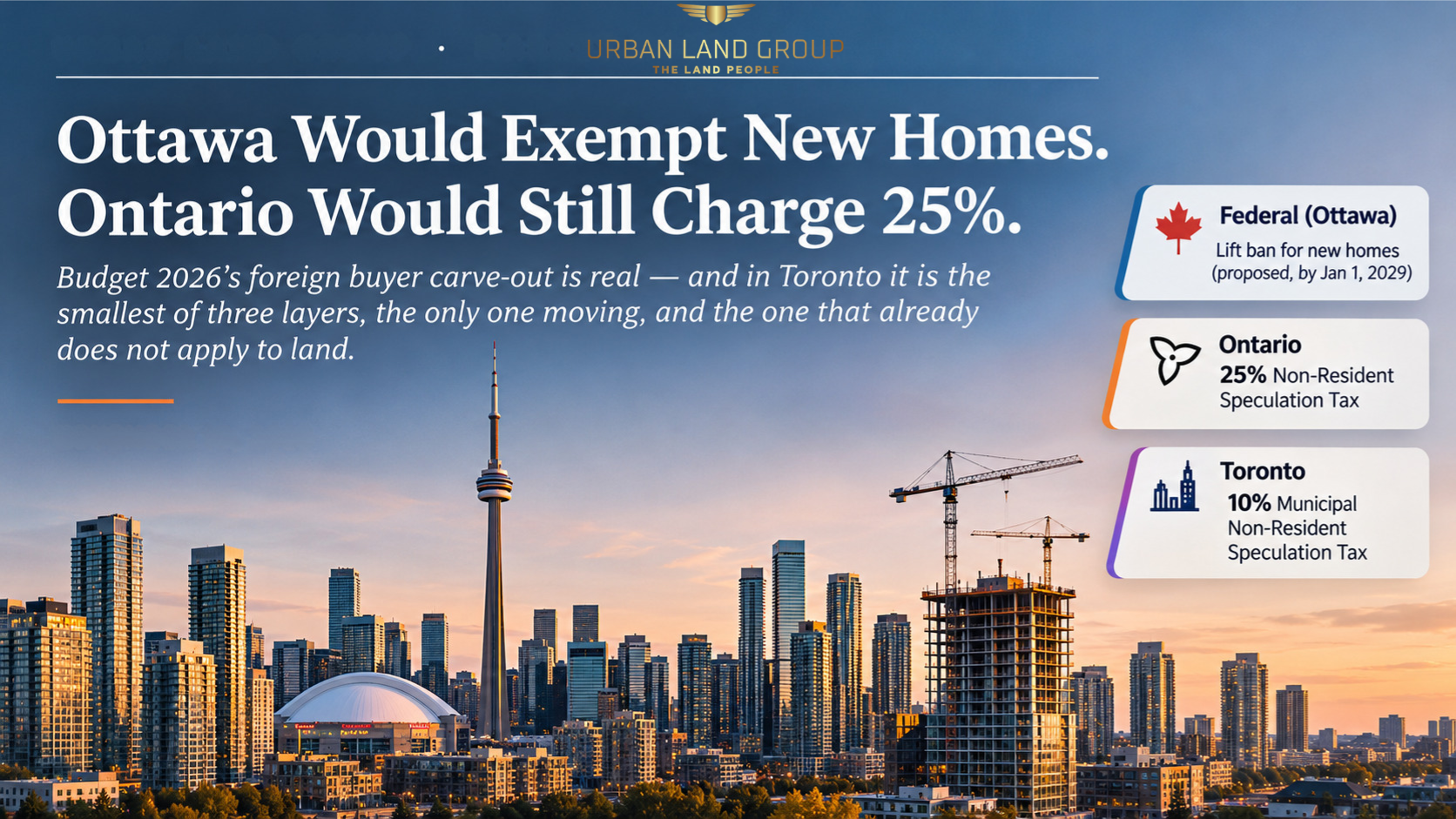
Budget 2026’s foreign buyer carve-out is real and in Toronto it is the smallest of three layers, the only one moving, and the one that already does not apply to land
November 13, 2026
Budget 2026 proposes to extend the federal ban on foreign purchases of existing residential property to January 1, 2029, while exempting new residential properties. The coverage has treated this as reopening foreign buying of new homes. The quotes are accurate. The conclusion is not — at least not in Ontario, and especially not in Toronto.
The federal prohibition is one of three layers. Ontario levies a 25% Non-Resident Speculation Tax province-wide. Toronto adds a 10% Municipal Non-Resident Speculation Tax. Neither contains a new-construction exemption, neither is touched by Budget 2026, and Ontario’s own guidance warns explicitly that a federal exception does not carry across.
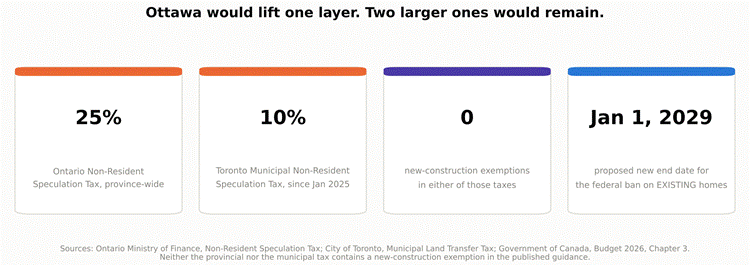
Figure 1. The three restrictions that bear on a foreign buyer of a new Toronto condominium.
What Budget 2026 actually says
The passage sits in Chapter 3, under Pillar 3. Both sentences being quoted are verbatim: the government will “extend the ban on foreign purchases of existing residential properties for two years, to January 1, 2029,” and claims this “would help protect housing affordability by keeping the vast majority of the market available for Canadians, while unlocking additional investment in new housing supply.”
Three things the passage does not contain. There is no effective date for the exemption — only the January 1, 2029 end point for the ban on existing homes. “New residential property” is not defined anywhere in the passage. And the change is not self-executing: the government states it “will propose legislation and launch a regulatory process on this change in short order.” Until both happen, nothing has changed.
The budget also notes the government will continue supporting measures that address housing pressures including speculation, “such as those levied by other levels of government.” That is a tacit acknowledgement that the provincial and municipal taxes are expected to stay.
The arithmetic a foreign buyer actually faces
Ontario’s NRST has been 25% of the full purchase price, province-wide, since October 25, 2022. It applies to designated land with one to six single-family residences, which includes condominium units. The published guidance sets out exemptions for provincial nominees, protected persons and spouses of Canadians — and no exemption for new construction. Ontario states plainly that “persons who are subject to an exception under the federal prohibition may not be exempt from Ontario’s NRST.”
Toronto layers on a Municipal Non-Resident Speculation Tax of 10% of the purchase price for foreign buyers of certain residential properties, in addition to the Municipal Land Transfer Tax, effective January 1, 2025. On top of that sit the provincial Land Transfer Tax and the municipal one, and the first-time buyer refunds in both are restricted to Canadian citizens and permanent residents.
On an $800,000 new Toronto condominium, a foreign buyer would face roughly $305,000 in closing taxes — about 38% of the purchase price. A Canadian buyer of the identical unit pays about $24,950, or 3.1%. Removing the federal prohibition closes none of that 35-point gap, because none of it is federal.
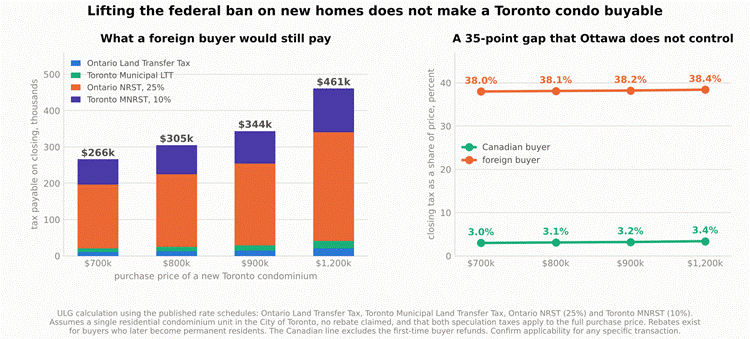
Figure 2. ULG calculation on the published rate schedules. The gap is provincial and municipal, not federal.
Three layers, one of them moving
Set out side by side, the asymmetry is stark. Ottawa proposes to lift a prohibition. Ontario and Toronto impose a combined 35% tax. The prohibition is a binary gate; the taxes are a price. In a market where buyers are already scarce, a 35% entry cost is the binding constraint, not the gate.
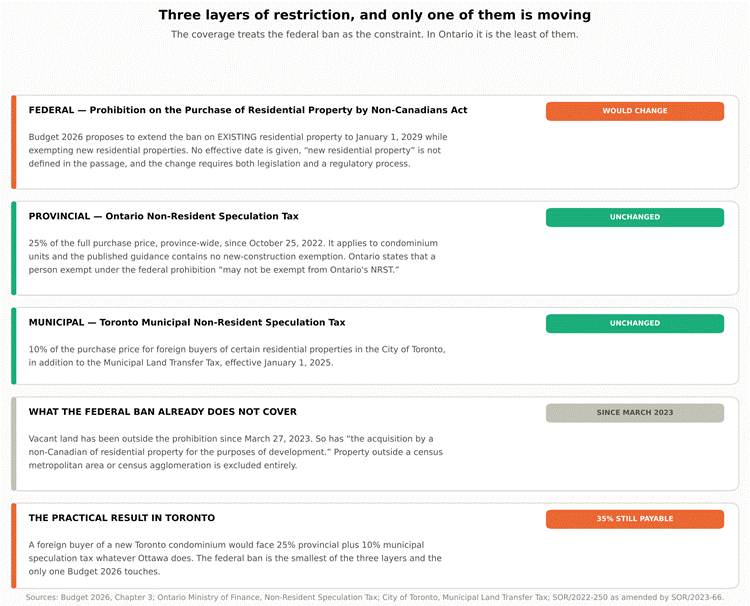
Figure 3. What each level of government has proposed, and what each has not.
For land, the federal ban stopped mattering in March 2023
This is the part that is most relevant to anyone acquiring development land and least discussed in the coverage. The regulations under the Act were amended effective March 27, 2023. Since that date, vacant land is outside the prohibition entirely, and the regulations expressly exclude from the definition of a purchase “the acquisition by a non-Canadian of residential property for the purposes of development.” Property outside a census metropolitan area or census agglomeration was never covered.
So for land acquisition and for development, the federal ban has not been a constraint for nearly three years. Budget 2026 changes nothing about the land picture. It is a measure about who may buy a finished dwelling. Anyone framing it as unlocking foreign development capital is describing something that already happened in 2023.
One caution worth noting: the regulations define control as direct or indirect ownership of 10% or more of equity value or voting rights, or control in fact. For a JV with any non-Canadian participation, that threshold is where the analysis starts — and it is low.
Were foreign buyers really concentrated in new condos?
The article cites 13.4% of BC’s new condos, 11.1% Nova Scotia, 10% New Brunswick, 9.2% Ontario, 7.7% Toronto and 13.6% Vancouver. None of those figures appear in the Statistics Canada releases we were able to read. The 2020 Canadian Housing Statistics Program release reports non-resident ownership of all residential properties at 3.6% in Nova Scotia, 3.1% in BC, 2.9% in New Brunswick and 2.2% in Ontario. The CMA table reports condominium apartment non-resident ownership at 6.3% in Toronto and 7.8% in Vancouver.
That does not make the article’s numbers wrong. StatCan does publish detailed tables with a period-of-construction breakdown, and a figure for condos built after 2016 would reasonably be higher than the all-vintage figure. We could not open those tables, so we are reporting what we verified and flagging what we did not. The direction of the argument — that non-resident ownership concentrates in newer condominium stock — is consistent with the published condo-versus-all-residential gap. The specific percentages are not ours to confirm.

Figure 4. The published figures, beside a note on the ones we could not locate.
Why Ottawa is reaching for this lever at all
The supply side explains the motive even if the measure misses. CMHC’s September data shows Ontario units approved but not yet started rising 7.6% in a single month to 34,448, while units under construction fell 2.5% to 145,608. Permits are being issued and not acted on. Presale absorption, not permission, is what is stalling starts.
Foreign demand is one of the few absorption levers a federal government can pull quickly without spending money. The logic is coherent: more presale buyers, better construction financing, more starts. Whether you find that acceptable policy is a separate question from whether it will work — and in Toronto it will not work, because the buyer it is aimed at still faces 35%.
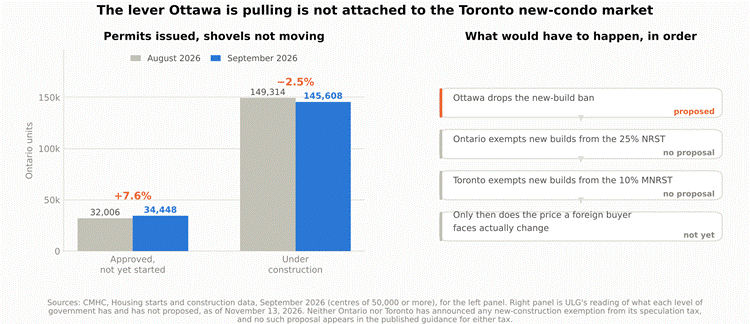
Figure 5. The problem Ottawa is responding to, and the sequence that would be needed for the response to land.
| THE ULG VIEW Read this as a signal about direction, not as a change in conditions. Ottawa has already legislated that no Underused Housing Tax is payable and no return required for 2025 and later years, and is now proposing to exempt new construction from the foreign buyer ban. The federal posture on non-resident capital in housing has reversed. That matters for how you think about 2028 and beyond. But do not reprice a Toronto condo pro forma on it. A foreign buyer of a new Toronto unit would still pay 25% provincial plus 10% municipal speculation tax. Neither government has proposed any new-construction exemption, and Ontario has published guidance anticipating exactly this situation and saying its tax still applies. Until Queen’s Park moves, the federal change is close to a non-event for GTA presale absorption. For land, there is no change at all. Vacant land and acquisitions for the purposes of development have been outside the federal prohibition since March 27, 2023. If a capital partner has been told the ban blocks a land deal, that advice has been wrong for nearly three years — though the 10% control threshold and Ontario’s NRST on any residential component still need to be worked through with counsel. The thing actually worth watching is whether Ontario follows. A provincial new-construction NRST exemption would be worth roughly twenty-five times the federal change to a Toronto presale. There is no sign of one. If it comes, that is the headline — not this. |
| WHAT IS CONFIRMED AND WHAT IS NOT Confirmed verbatim. Both Budget 2026 quotations were checked word for word against Chapter 3 of the budget. The NRST rate, scope, exemptions and the warning about federal exceptions are quoted from the Ontario Ministry of Finance pages. The Toronto MNRST rate and effective date are from the City of Toronto. The vacant-land and development exclusions and the 10% control threshold are from the regulations and CMHC’s summary of the March 27, 2023 amendments. Our arithmetic, not anyone’s published figure. The tax-stack totals and percentages are ULG calculations applying the published Ontario LTT, Toronto MLTT, NRST and MNRST schedules to hypothetical prices. They assume a single Toronto condominium unit, no rebate claimed, and that both speculation taxes apply to the full price. Rebates exist, notably for buyers who later become permanent residents. Any real transaction needs advice from a lawyer. Could not be located. The article states Budget 2026 “boasted about their contribution to roughly 250,000 annualized new home starts in the first half of 2026, 20% above the 2015-2019 average.” We did not find that passage in Chapter 2 or the parts of Chapter 3 and the budget PDF we read. The nearest figure is a hypothetical: productivity gains “equivalent to adding up to 150,000 additional housing starts per year.” We did not read the entire document, so we are not saying the claim is absent — only that we could not verify it. Could not be verified. The non-resident ownership percentages for new condos (13.4%, 11.1%, 10%, 9.2%, 7.7%, 13.6%) do not appear in the StatCan releases we read. They may come from detailed CHSP tables with a period-of-construction breakdown that we were unable to open. Legally unsettled. The Act itself contains no expiry date. Its repeal is tied to a section of the Budget Implementation Act, 2022, No. 1 that is listed as not in force. CMHC describes the extension to January 1, 2027 as an intention announced on February 4, 2024 and does not confirm enactment. Ontario’s own NRST page still describes the federal prohibition as having run to December 31, 2024. Treat the precise federal end date as something to confirm with counsel rather than from any single page. On the Underused Housing Tax, the precise wording matters. The Act has not been repealed and remains in force. What changed is that the Budget 2025 Implementation Act, No. 1 (S.C. 2026, c. 3, assented to March 26, 2026) added a “Non-application” section stating that no tax is payable “for 2025 and subsequent calendar years”, and a “Return not required” section to the same effect. Obligations for 2022 through 2024 are unchanged. We could not reach the CRA’s own guidance page; this comes from the consolidated statute. No effective date exists for the new-build exemption. It requires legislation and a regulatory process that had not begun as of this note. |
Sources
Official and primary sources
· Government of Canada, Budget 2026, Chapter 3 — Pillar 3: Building a housing market that works for all. https://budget.canada.ca/2026/report-rapport/chap3-en.html
· Government of Canada, Budget 2026 (full report, PDF). https://budget.canada.ca/2026/report-rapport/pdf/budget-2026.pdf
· Ontario Ministry of Finance, Non-Resident Speculation Tax. https://www.ontario.ca/document/non-resident-speculation-tax
· Ontario Ministry of Finance, Calculating Land Transfer Tax. https://www.ontario.ca/document/land-transfer-tax/calculating-land-transfer-tax
· City of Toronto, Municipal Land Transfer Tax — rates and fees (including the Municipal Non-Resident Speculation Tax). https://www.toronto.ca/services-payments/property-taxes-utilities/municipal-land-transfer-tax-mltt/municipal-land-transfer-tax-mltt-rates-and-fees/
· Prohibition on the Purchase of Residential Property by Non-Canadians Act, S.C. 2022, c. 10, s. 235. https://laws-lois.justice.gc.ca/eng/acts/P-25.2/FullText.html
· Prohibition on the Purchase of Residential Property by Non-Canadians Regulations, SOR/2022-250, as amended by SOR/2023-66. https://laws-lois.justice.gc.ca/eng/regulations/SOR-2022-250/FullText.html
· CMHC, Prohibition on the Purchase of Residential Property by Non-Canadians Act — summary of the March 27, 2023 amendments. https://www.cmhc-schl.gc.ca/professionals/housing-markets-data-and-research/housing-research/consultations/prohibition-purchase-residential-property-non-canadians-act
· Underused Housing Tax Act, consolidated — sections 1.1 (Non-application) and 6.1 (Return not required), as added by S.C. 2026, c. 3. https://laws-lois.justice.gc.ca/eng/acts/U-0.5/FullText.html
· Statistics Canada, Canadian Housing Statistics Program, 2020 (released September 17, 2021). https://www150.statcan.gc.ca/n1/daily-quotidien/210917/dq210917b-eng.htm
· Statistics Canada, Non-resident ownership rates by census metropolitan area, British Columbia and Ontario. https://www150.statcan.gc.ca/n1/daily-quotidien/180625/t002a-eng.htm
· CMHC, Housing starts and construction data, September 2026. https://www.cmhc-schl.gc.ca/media-newsroom/news-releases/2026/housing-starts-construction-data-september-2026
Trade press (not official)
· Better Dwelling, “Canada To Lift Ban On Foreign Buyers of New Homes For ‘Affordability’”, November 6, 2026 — the article this note responds to. https://betterdwelling.com/canada-to-lift-ban-on-foreign-buyers-of-new-homes-for-affordability/
Sunny Gawri
Urban Land Group land development advisory and commercial brokerage
Sales Representative, Royal LePage Signature Realty, Brokerage registered in Ontario since 2013
30 Eglinton Avenue West, Mississauga, Ontario
This note is general market commentary compiled from public sources. It is not an appraisal, not a legal opinion, and not tax advice. Figures described as ULG calculations are our own arithmetic on published rate schedules and are illustrative only. Land transfer tax, speculation tax and the federal prohibition each turn on facts specific to the purchaser and the property; obtain advice from a lawyer and a tax advisor before acting on any of it.