
Canada Has a Tax Rollover for Replacing a Building. Apartments Are Written Out of It.
A proposal for a U.S.-style like-kind exchange to fund rental construction is circulating. The interesting part is what it reveals: the deferral already exists in the Income Tax Act, and rental property is explicitly carved out of it.
Urban Land Group · September 28, 2026
Mike Moffatt of the Missing Middle Initiative has proposed, in a Globe and Mail feature on tax reform, a “like-kind exchange” capital tax provision for new apartment construction. The mechanism: a builder who sells an older building and puts the proceeds into new rental would be treated as making a trade rather than a sale, so no capital gain is triggered. As he puts it, it “does not eliminate or even reduce the capital gain taxes that are eventually owed, but it does allow the builder to defer them.” Allan Drewlo, sharing it, made the sharper point: the builder would have all the proceeds to reinvest, not the net of tax.
Canada already has this rule. Apartments are excluded from it.
This is the part worth knowing. Under subsections 13(4) and 44(1) of the Income Tax Act, a taxpayer who disposes of a “former business property” and acquires a replacement can defer both the capital gain and the recapture of capital cost allowance. CRA’s own folio then states the catch: the definition “generally does not include rental property” — where rental property means real property used principally to earn gross revenue that is rent.
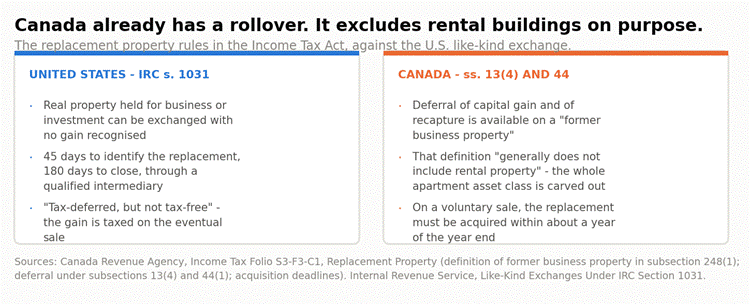
Figure 1 — The two regimes, side by side.
So the policy question is narrower than “should Canada copy section 1031.” It is: should the rollover Canada already grants to operating businesses be extended to the rental asset class it deliberately excludes?
What the exclusion costs a builder
Take an older Ontario apartment building sold for $20 million, with an $8-million adjusted cost base and $6 million of undepreciated capital cost. That is a $12-million capital gain at the one-half inclusion rate, plus $2 million of recapture taxed in full.
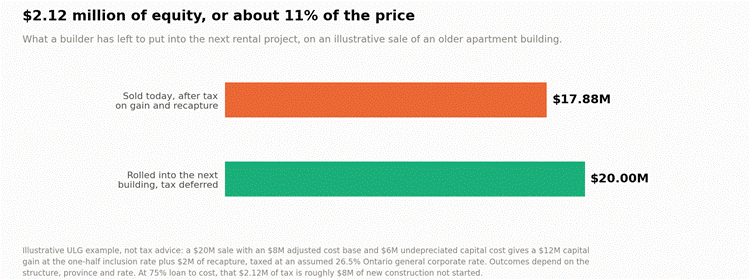
Figure 2 — Illustrative proceeds available to reinvest.
At an assumed 26.5% general corporate rate the bill is about $2.12 million — roughly 11% of the sale price, and all of it equity. At 75% loan to cost that is on the order of $8 million of new rental construction that does not get started, or gets started later.
The rest of the stack is already built
What makes the gap conspicuous is how much else has been done on the construction side: GST fully rebated on new purpose-built rental for construction starting between September 14, 2023 and December 31, 2030; capital cost allowance raised from 4% to 10% for eligible new rental starting after April 15, 2024; Ontario’s rental rebate enhanced to the full 8% provincial HST on units under $1 million to March 31, 2027; and, in Ontario, units first occupied after November 15, 2018 are exempt from the rent increase guideline — 1.9% for 2027.
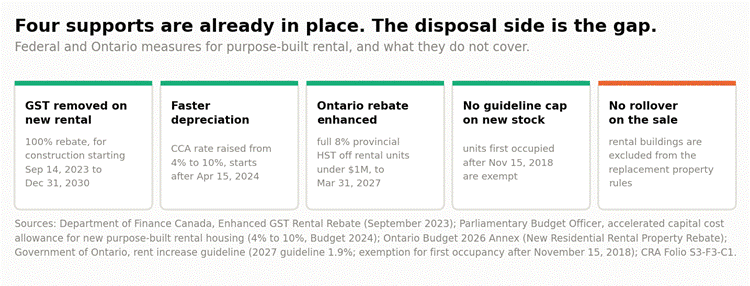
Figure 3 — The measures in place, and the one that is not.
| WHAT IS LAW, WHAT IS PROPOSED, AND WHAT IS OURS The like-kind exchange for rental construction is a proposal by Mike Moffatt of the Missing Middle Initiative, published in The Globe and Mail. It is not government policy and is not before Parliament. We have not accessed the Globe article; the proposal is quoted as it appeared in the LinkedIn post circulating it. The comment about freezing rents on older buildings is the commenter’s characterisation, not a government statement. Everything else is law: the replacement property rules and the rental carve-out are CRA’s own folio; the GST rebate, the accelerated capital cost allowance, the Ontario rebate and the rent guideline exemption are as published. The figures in Figure 2 are an illustrative Urban Land Group example at an assumed corporate rate — not a calculation for any real property, and not tax advice. The capital gains inclusion rate is one-half; the proposed increase to two-thirds was cancelled in March 2025. Confirm anything transactional with tax counsel. |
| THE ULG VIEW The diagnosis is right and it is not an opinion — it is in the statute. Canada already lets a business defer a gain and the recapture when it replaces a property. Rental buildings are carved out of the definition. An owner of an older apartment block who wants to recycle equity into new construction pays first and builds with what is left. On our illustrative $20-million trade that is $2.12 million of equity, roughly 11% of the price, and at normal leverage roughly $8 million of construction that does not start. Stress-test it before repeating it, though. A rollover is a deferral, not a grant, so its cost is timing — but three things follow that its advocates rarely price. It raises bids for older rental buildings, because the buyer pool grows and sellers keep more; it locks in owners who would otherwise sell to the highest-value user; and, if it is conditioned on new rental construction, the released equity chases the same small pool of zoned rental sites. Capitalised land value is where a measure like this lands first. The constraint may not be capital at all. CMHC has purpose-built rental starts up 82% in the City of Toronto against 156 condominium starts. Rental is already the format that works. What is stopping the next project is usually land price plus construction cost against achievable rents — not a shortage of willing equity. A rollover helps the owner who happens to be sitting on a low-basis building. It does nothing for the builder who has no old building to sell. Where it matters for our files. If this ever becomes policy, the immediate winners are holders of low-basis older apartment stock and sellers of shovel-ready rental-zoned land. So: on any older rental building we are advising on, get the adjusted cost base and undepreciated capital cost out of the client’s accountant early — that number now drives the hold-or-sell decision as much as the cap rate does. And treat this as a proposal to one newspaper, not a measure. It is not in any budget. |
Sources
· Canada Revenue Agency — Income Tax Folio S3-F3-C1, Replacement Property (former business property “generally does not include rental property”; deferral under ss. 13(4) and 44(1); acquisition deadlines). https://www.canada.ca/en/revenue-agency/services/tax/technical-information/income-tax/income-tax-folios-index/series-3-property-investments-savings-plans/folio-3-capital-transactions/income-tax-folio-s3-f3-c1-replacement-property.html
· Internal Revenue Service — Like-Kind Exchanges Under IRC Section 1031 (45-day identification, 180-day completion, “tax-deferred, but it is not tax-free”). https://www.irs.gov/pub/irs-news/fs-08-18.pdf
· Department of Finance Canada — Enhanced GST Rental Rebate to build more apartments for renters, September 2023 (rebate raised from 36% to 100%; eligibility; construction window). https://www.canada.ca/en/department-finance/news/2023/09/enhanced-gst-rental-rebate-to-build-more-apartments-for-renters.html
· Parliamentary Budget Officer — Accelerated Capital Cost Allowance for Eligible New Purpose-built Rental Housing (4% to 10%; construction after April 15, 2024; costed as a revenue deferral). https://www.pbo-dpb.ca/en/publications/LEG-2425-005-S–accelerated-capital-cost-allowance-eligible-new-purpose-built-rental-housing–deduction-amortissement-accelere-nouveaux-logements-admissibles-destines-location
· Government of Ontario — 2026 Budget, Annex (New Residential Rental Property Rebate enhanced to the full 8% provincial portion, April 1, 2026 to March 31, 2027). https://budget.ontario.ca/2026/annex.html
· Government of Ontario — Rent increase guideline (2027 guideline 1.9%; exemption for units first occupied after November 15, 2018). https://www.ontario.ca/page/rent-increase-guideline
· CMHC — Fall 2026 Housing Supply Report (purpose-built rental starts up 82% in the City of Toronto; 156 condominium starts in the first half). https://www.cmhc-schl.gc.ca/professionals/housing-markets-data-and-research/market-reports/housing-market/housing-supply-report
· Missing Middle Initiative — Mike Moffatt (the proposal’s author). https://www.missingmiddleinitiative.ca/
Charts by Urban Land Group. Figure 2 is an illustrative example at an assumed rate, not a calculation for any real property. The like-kind exchange described is a proposal, not enacted law. General market commentary; not tax, legal, investment or financial advice — confirm any transaction with tax counsel.